12 Must-Have Call Center Software Features to Look for in 2026

18 mins read

Posted on May 23, 2024

Vignesh N
SEO


Vignesh N
SEO





Choosing call center software often starts with a pricing page. Businesses compare the number of features, scan the plans, and assume the platform with the longest list must be the better option. The problem is that a feature only matters if it solves a real operational problem for your team.
The call center software market is also moving quickly. Grand View Research estimates that the global contact center software market will grow from $56.9 billion in 2026 to $227.6 billion by 2033, representing a 21.9% CAGR. That growth means businesses have more platforms and capabilities to choose from, but it also makes it harder to separate useful functionality from features that simply look good on a product page.
This guide focuses on 12 call center software features to look for to have a direct effect on agent productivity, customer experience, and day-to-day operations. For each one, we’ll look at what it does, how it works, why it matters, and what you should check before choosing a provider.

Key Takeaways
 The right call center features should solve specific operational problems, and not simply make a platform look feature-rich.
- ACD, IVR, monitoring, recording, and analytics affect how efficiently teams handle and manage calls.
- Outbound teams should evaluate dialers based on their campaign workflow and agent availability rather than choosing automation by default.
- CRM integration and screen pop can reduce manual work and give agents useful customer context during conversations.
- The best combination of features depends on call volume, team structure, customer expectations, existing tools, and budget.
Why These 12 Features?
These 12 features were selected because they address some of the most common requirements in call center operations and have a direct connection to measurable outcomes such as wait time, agent utilization, call handling, quality management, and customer continuity. They also represent capabilities buyers are likely to encounter when comparing modern platforms, while some are less consistently available or configurable in entry-level plans. This makes them a useful starting point for a call center software buying guide rather than another generic feature list.
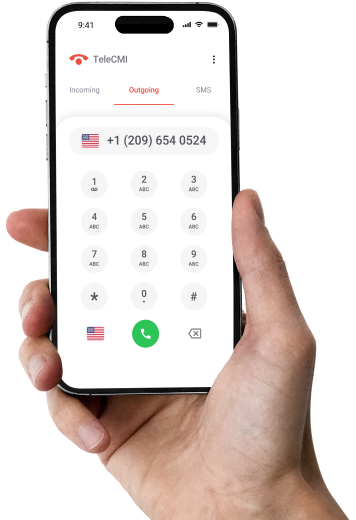
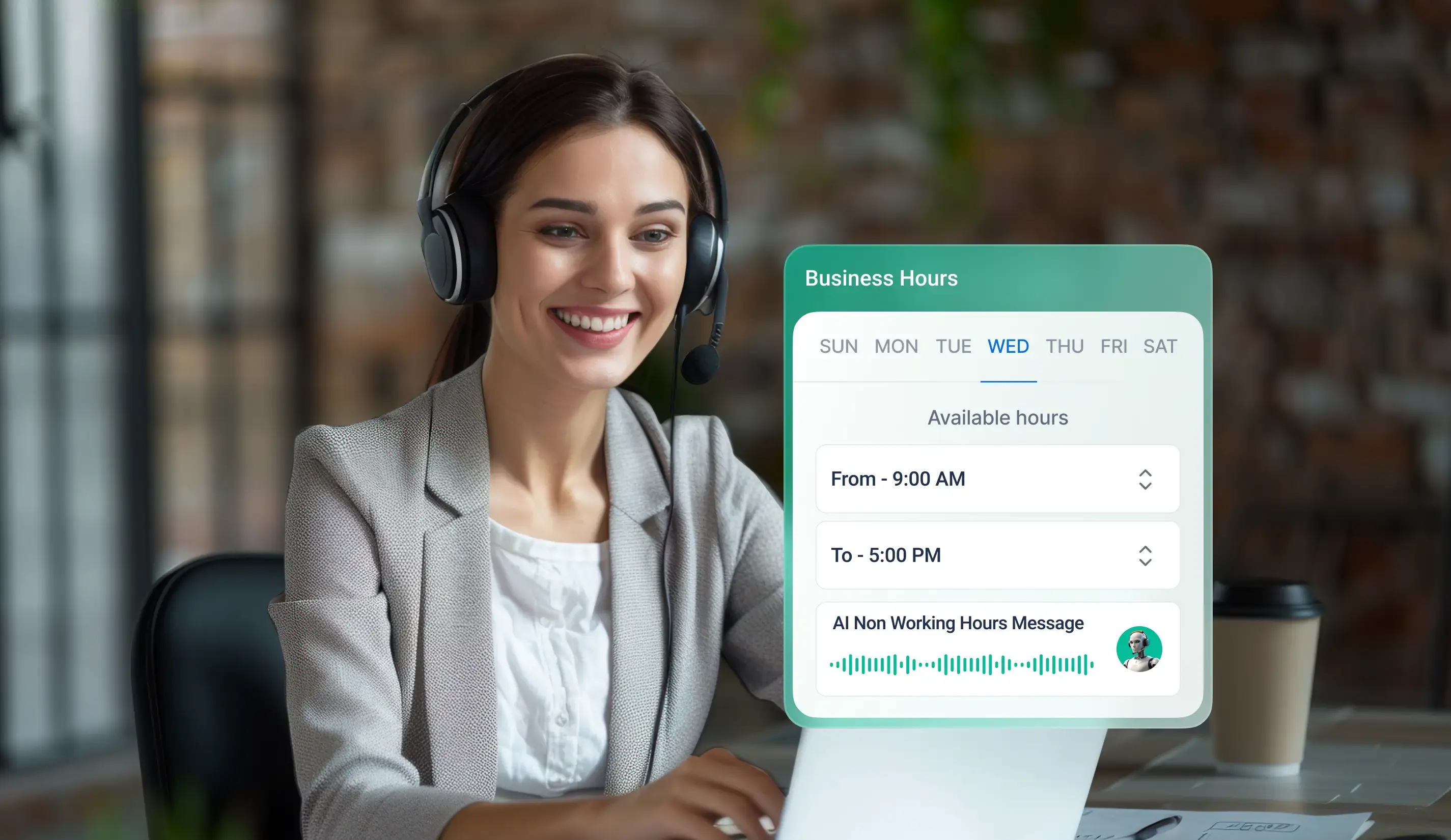
3. Multi-Level IVR
The AI IVR feature enables callers to navigate through a series of menu options using their touch-tone keypad or voice commands.
When a customer contacts a call center, the IVR system greets the caller and presents a series of options for the caller to choose from. The caller can then select an option that best matches their reason for calling, which can help to direct them to the appropriate department or agent.
Particularly useful for call centers with a large volume of incoming calls, as it can help to reduce call handling time and improve customer satisfaction.
By providing a menu of options, the IVR software can help callers quickly and easily find the information or assistance they need, without having to wait for an agent to become available.
1. Automatic Call Distribution (ACD)
Automatic Call Distribution, or ACD, controls how incoming calls are assigned to agents. Instead of sending every caller to the same general queue, it uses configured rules to decide where each call should go.
How calls are routed - The routing can take factors such as agent availability, department, skills, language, priority, or other conditions into account. For example, a billing query can be directed to the billing team instead of putting the caller into the same queue as a technical support request.
Why it matters - As call volume grows, sending each call to the right agent becomes more important. Without proper routing, customers may end up with the wrong team, get transferred multiple times, or wait longer than necessary. A well-configured ACD helps spread calls across the team and keeps transfers to a minimum.
Before you choose one - Ask whether the routing rules can be configured around your actual team structure. Check for the queues, fallback rules, routing conditions, and reporting capabilities you need.
2. Interactive Voice Response (IVR)
Interactive Voice Response, or IVR, gives callers a way to choose where their call should go before speaking with someone. They might hear options such as sales, support, or billing and select the one they need.
How it works - Once the caller makes a selection, the system sends the call through the corresponding routing flow. More advanced setups can include multiple level IVR, business-hour rules, greetings, and different routes for different departments.
Where it helps - A clear IVR can make it easier for customers to reach the right team and reduce unnecessary transfers. It also saves agents from spending time redirecting calls that belong elsewhere. But adding more menu levels does not necessarily improve the experience - a complicated IVR can make it harder for callers to get help.
A useful buying check - When comparing call center software features, check how easily you can build, change, and test IVR flows. Look for flexible routing, business-hour handling, fallback options, and configuration that does not require technical expertise for every small change.
3. Call Monitoring, Barging, and Whispering
Supervisors can support agents in different ways using call monitoring, whispering, and barging. Monitoring lets them listen to a live conversation without interrupting. Whispering allows them to give the agent guidance that the customer cannot hear. Barging takes it a step further by bringing the supervisor into the call with both sides.
How supervisors use them - The right approach depends on what is happening on the call. A quick whisper may be enough to help a new agent, while a difficult escalation may call for the supervisor to take part directly. Monitoring is useful when the goal is simply to observe and understand the interaction.
Why teams use them - These capabilities give supervisors a clearer view of call quality and agent performance. They also make coaching more immediate because managers can provide guidance during an interaction instead of waiting until the call has ended.
Check this before buying - Look at the supervisor controls and permission settings. It is also worth checking how easily managers can access active calls and whether these capabilities work reliably across the calling setup you plan to use.
4. Call Recording
With call recording, agent-customer conversations can be saved and reviewed later. Authorized members (like a manager or admin) can listen to recordings when they need to check what was discussed or understand how a call was handled.
How it is used - A recorded conversation can be accessed after the call for quality checks, coaching, training, or customer issue investigation. Instead of relying only on an agent's notes or memory, managers can go back to the actual conversation and review what happened.
Why it matters - Recording gives quality teams a larger pool of conversations to assess and helps managers identify patterns across agents. It can also be useful when a business needs to revisit a specific customer interaction.
Check the recording setup - Look beyond whether recording is available. Find out how recordings are stored, who can access them, how long they are retained, whether they can be exported, and what controls are available. Businesses should also account for applicable consent, privacy, and data-handling requirements.
5. Call Analytics
With call analytics, managers can see how their call operation is performing through metrics such as call volume, wait time, duration, missed calls, queue performance, and agent activity.
How teams use the data - The numbers can help explain where problems are coming from. A rise in missed calls may point to a staffing gap, longer wait times could mean a queue is overloaded, and differences in how agents handle calls may show where more coaching is needed.
The operational value - Analytics help managers spot recurring patterns rather than reacting to individual incidents. Those insights can inform decisions around staffing, scheduling, routing, training, and other process changes.
What to check - Ask which metrics are available without additional configuration and how flexible the reporting is. Ideally, managers should be able to get useful operational insights without exporting data every time they need to investigate a problem.

According to Salesforce's State of Service report, 79% of service professionals are investing in agentic AI. The report looks at how 6,500 service and field service professionals are using AI to scale service operations, including AI agents, conversational voice and multimodal interactions, and more efficient field service.
6. Outbound Dialer
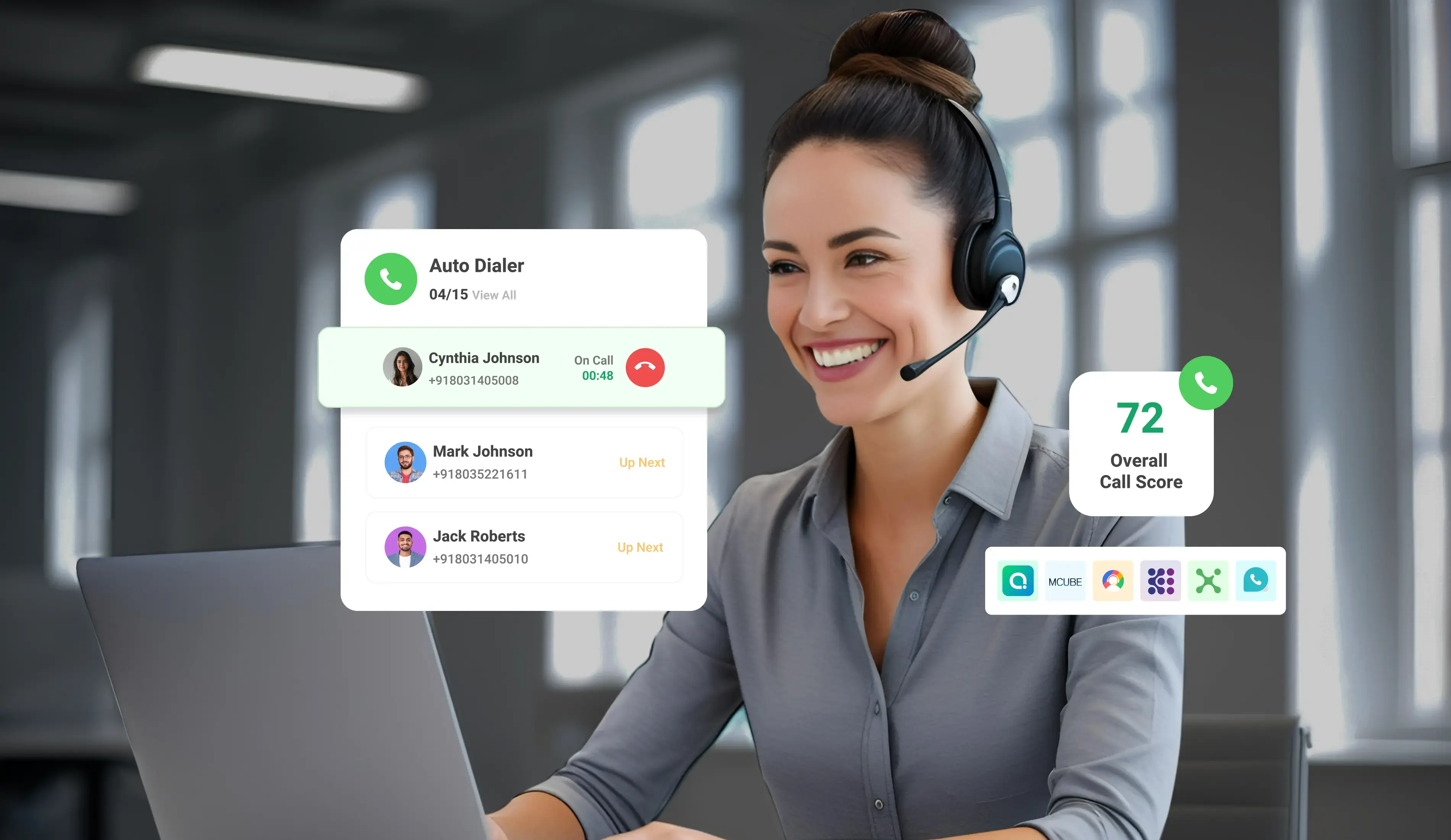
An outbound dialer automates part of the process of calling a contact list. Rather than having agents manually find and dial each number, the system can manage calls through a configured campaign and connect answered calls to available agents.
How the auto dialing works - Different dialing modes suit different outbound workflows. Predictive dialing can initiate calls based on expected agent availability and is suited to higher-volume campaigns, while progressive dialing places the next call when an agent is available.
Why it matters - Dialers can reduce the time agents spend on manual dialing and make high-volume campaigns easier to manage. They can be useful for sales, collections, surveys, follow-ups, and other outbound activities where agents need to work through a large contact list.
Before selecting a dialer - An auto dialer can work very differently from one platform to another. Look at the dialing options, lead and campaign management, and how well the workflow fits the way your team makes calls.
7. CRM/CTI Integration
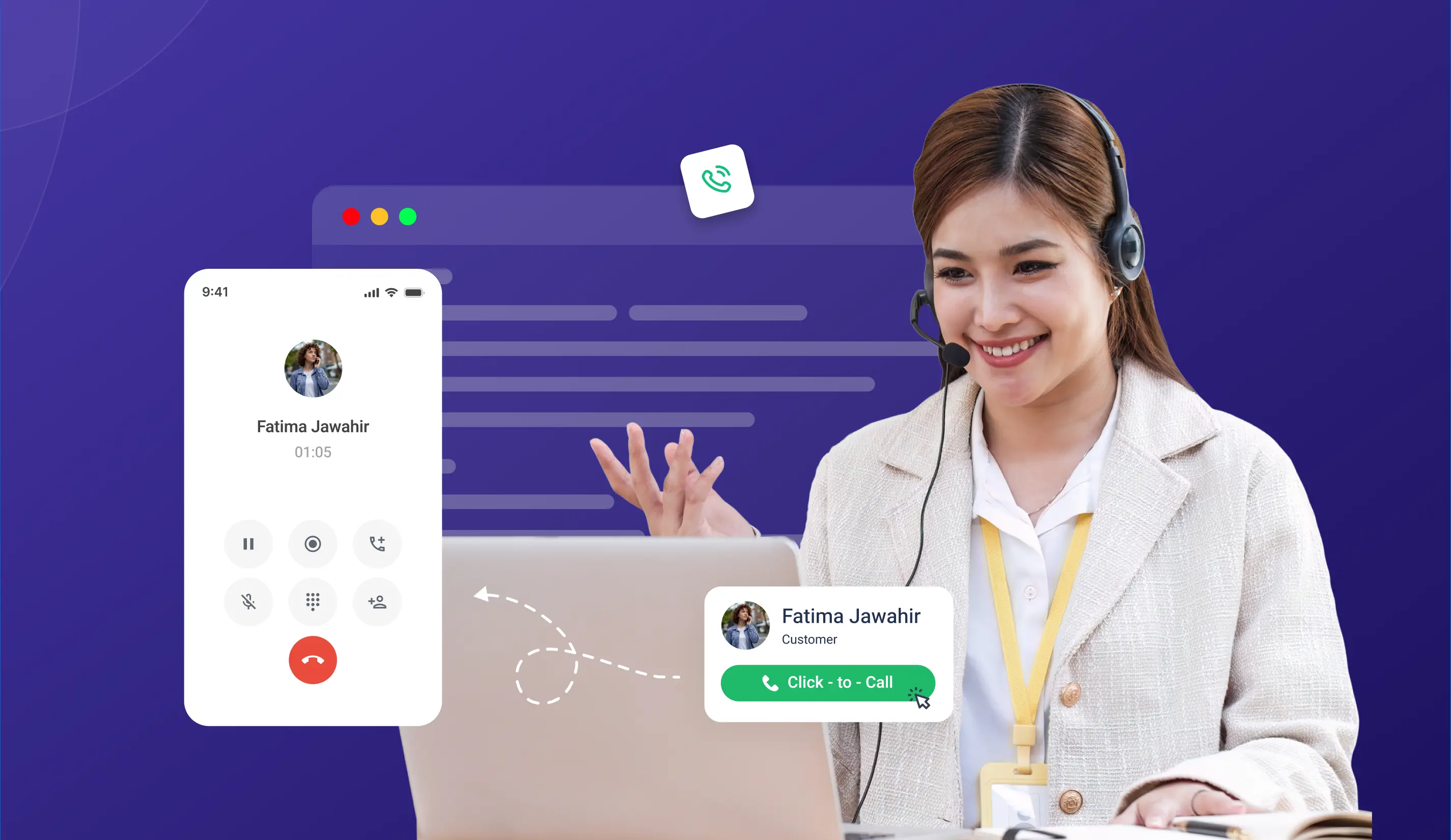
Computer Telephony Integration, or CTI, connects the phone system with the applications agents already use, particularly CRM platforms. Depending on the integration, calls, contact information, call history, recordings, and other activity can be linked with customer records.
What happens in practice - Without integration, agents may need to move between the phone system and CRM, search for customer records, enter call details manually, and update information after the conversation. With a connected workflow, much of that information can be handled within the same environment.
Why it can make a difference - Agents get more customer context without repeatedly switching between tools, while managers can get a complete picture of customer interactions. It can also reduce repetitive administrative work across a high volume of calls.
A question worth asking - Is your CRM natively supported, and exactly what can the integration synchronize? Do not assume that two platforms have the same integration just because both list your CRM on their websites.
HubSpot research found that 31% of sales reps spend more than an hour each day on data entry, including tasks like updating CRM records and adding contact details. Connecting the calling system with the CRM can take some of that work off their hands by capturing call activity automatically, where supported.
8. Screen Pop-Ups
A screen pop shows the relevant customer details when a call comes in. Rather than answering the phone and then searching for the caller's record, the agent can have that information in front of them as the call starts.
How it works - The information shown depends on the connected CRM or business system. It includes the customer's name, contact details, previous interaction notes, tags, or other relevant CRM data.
Why agents benefit - Agents do not have to spend the opening part of a conversation searching for basic customer context. Having that information available immediately can help them get to the actual issue faster and avoid asking for details the business already has.
Check this before choosing - Find out which CRM fields can appear in the screen pop and how quickly they load when a call arrives. Also confirm that the feature is included in the specific CRM integration you plan to use.
9. Number Masking
Number masking lets two people speak over the phone without either side seeing the other's personal number. In a call center, this means agents can call customers without having to share their personal mobile numbers.
How it works - A business-controlled number or routing layer sits between the two parties. The customer sees the configured business-facing number, while the call can still be connected to the intended agent.
Where it is useful - This can be helpful when agents work remotely, use their own mobile devices, or need to make calls outside the office. It keeps personal contact details separate while still allowing agents to stay in touch with customers.
What to ask the provider - Find out what number the customer sees, how callbacks are handled, and whether administrators can control which users or workflows use masked numbers. The exact behavior can vary considerably between providers.
10. Toll-Free Numbers
A toll-free number gives customers a way to call a business without having to pay the applicable call charges. Instead, those charges are generally handled by the business.
How they fit into a call center - Businesses can use toll-free numbers as dedicated channels for sales, support, billing, or other customer-facing functions. The number can then be connected to IVR and routing rules so incoming callers reach the appropriate team.
Why availability matters - For businesses operating across regions, the countries or areas where toll-free numbers are available can affect how useful the service is. The associated calling costs and routing options also need to fit the business's expected call volume.
Before you commit - Ask which countries or regions are supported, what the ongoing calling costs are, and how easily the number can be connected to your existing IVR and routing setup.
11. SMS
SMS can extend a customer interaction beyond the phone call. Instead of asking customers to remember information discussed during a conversation, teams can send a confirmation, reminder, update, link, or next step by text.
Common uses - Call centers can use SMS for appointment reminders, order updates, follow-up messages, notifications, and post-call communication. For example, a support team could send a confirmation after resolving an issue, while a service business could send an appointment reminder.
Why it matters - SMS works best when it is part of the wider customer communication workflow rather than treated as an unrelated marketing channel. A call can trigger a relevant message, or a text can provide information that would otherwise require another phone interaction.
What to examine - When comparing call center software capabilities, ask whether SMS is integrated into the same customer workflow as voice calls and whether messages can be tracked alongside call activity.
12. Sticky Agent
Sticky Agent routing helps returning customers reconnect with the same agent they spoke with before, when that agent is available. This can be useful when a customer has an ongoing issue and does not want to explain the situation all over again.
How routing works - When the customer calls again, the system can recognize the previous agent and try to route the call back to them. If that agent is unavailable, the call can follow the business's other routing rules.
Why continuity matters - Customers do not always want to explain the same issue from the beginning every time they call. Keeping them with the same agent where possible can preserve context and make ongoing support conversations easier to manage.
A practical buying question - Ask what happens when the preferred agent is unavailable. You should also understand how Sticky Agent interacts with skills, queues, availability, and other routing rules so that continuity does not come at the expense of efficient call handling.
How to Evaluate Call Center Software Before You Buy
Once you have narrowed down the call center software features you need, use these questions to evaluate how those features actually work in the plans you are considering:
- Which features are included in the base plan vs locked behind higher tiers? - Look closely at what each plan actually includes. Features like call recording, analytics, integrations, or advanced routing may only be available on higher plans or come at an additional cost.
- Is there a free trial at real call volume, not just a limited demo? - Test the platform with realistic call volumes and actual workflows to see how it performs beyond a guided product demonstration.
- Do CRM integrations work natively or via third-party connectors? - Find out whether the CRM you use has a native integration or requires a third-party connector, and consider how that affects setup, reliability, and ongoing maintenance.
- What is the uptime SLA, and is 24/7 support available on your plan? - Check the uptime commitment for the specific plan you are considering and find out exactly when support is available. This matters even more if your team handles calls beyond regular business hours.
- Can non-technical managers configure features without IT involvement? - Test whether managers can handle everyday changes such as configuring IVR, call routing, users, business hours, and other settings without depending on technical teams.
Wrapping Up
The best software isn't the one with the biggest feature list. A platform can do 100 different things and still be a pain to use if it doesn't fit your call flows, won’t integrate with your CRM, or even worse, it makes you call IT just to tweak a basic setting.
Start with the way your team actually handles calls. Consider your inbound and outbound volume, team structure, customer expectations, CRM requirements, reporting needs, budget, and plans for growth. Then use those requirements to decide which call center features deserve the most attention.
The goal is not to buy every available capability. It is to choose the combination of call center software capabilities that removes friction from your existing workflows and gives agents, managers, and customers a better experience.
TeleCMI is one option businesses can consider when evaluating cloud-based call center software. The platform brings together call routing, IVR, monitoring, recording, analytics, outbound dialing, integrations, Sticky Agent, toll-free numbers, and other communication capabilities within a cloud-based environment. With these capabilities, TeleCMI supports day-to-day contact center operations while providing the integrations businesses need to connect their calling workflows with the tools they already use.
"Power Up Your Call Center – Start for Free & Scale with Ease!"

Instant Setup
Enterprise-Grade Features
Scalable & Secure
Frequently asked questions (FAQ)
Vignesh N

With deep expertise in cloud telecommunications, I help readers explore the latest trends in VoIP and modern business communication. At TeleCMI, I focus on educating businesses with clear, practical insights, making complex telecom concepts easy to understand. I’m passionate about helping organizations improve efficiency, enhance customer engagement, and adopt smarter communication strategies.

.webp)