How VoIP PBX Improves Collaboration for Remote & Hybrid Teams

11 mins read

Posted on Mar 25, 2026


Saravana Kumar
SEO


Saravana Kumar
SEO






In modern business operations, remote and hybrid work cultures are the norm. Teams no longer fit in a single office; they can stay at home, multiple locations, even across boundaries, and the customer can expect the same level of responsiveness from the employees. While this shift has improved flexibility and access to talent, it has also exposed a growing communication gap across many organizations.
According to Cisco Global recent stats, nearly 49% of employees report that their communication platforms don’t work seamlessly across locations.
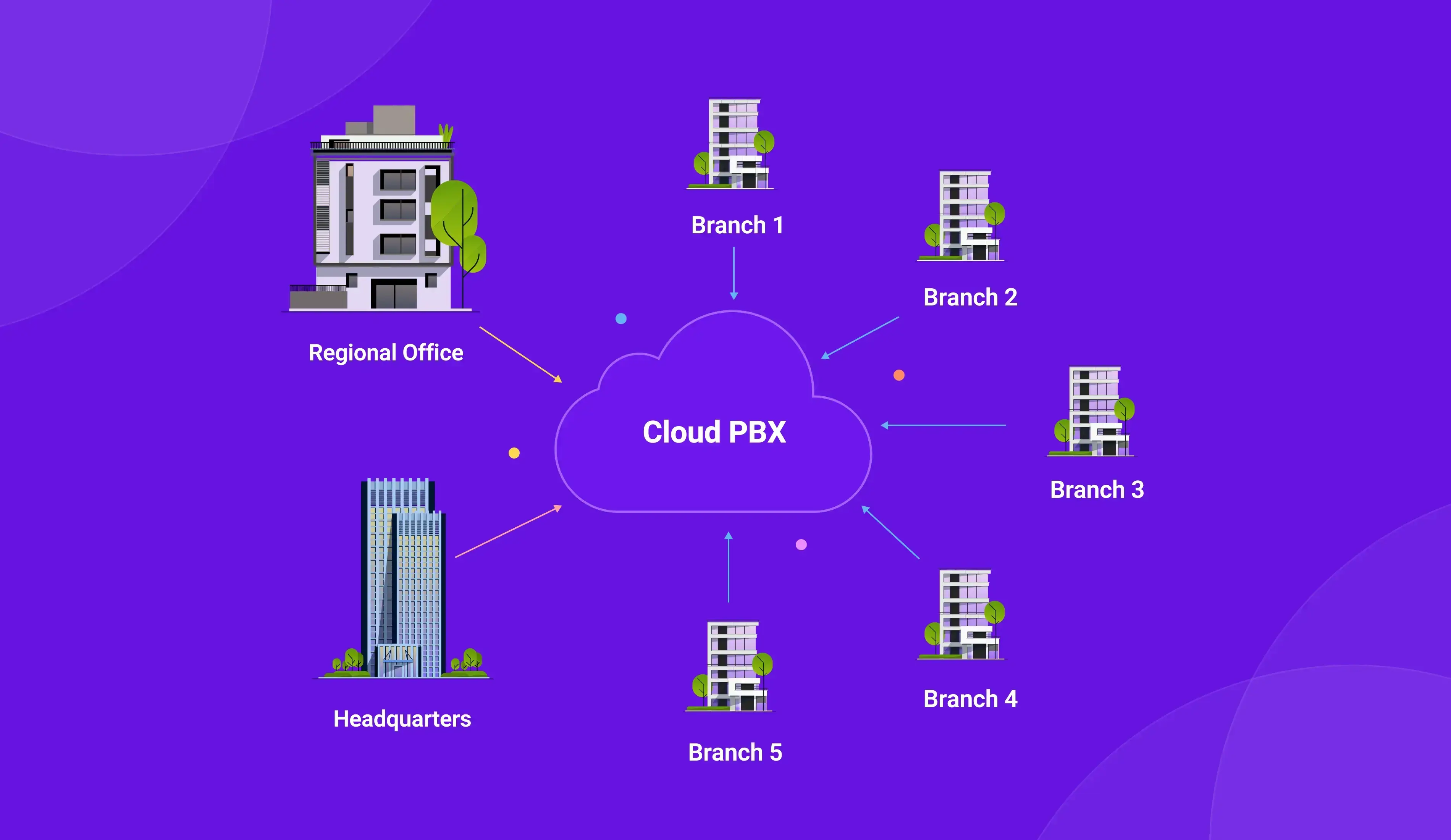
A VoIP PBX system addresses this problem by bringing business conversations into a structured, centralized environment. Teams remain reachable, context stays intact, and communication works the same way whether employees are in the office or working remotely.
In this blog, we’ll explore how a VoIP PBX system enables seamless communication for remote and hybrid teams.

Key Takeaways
 A VoIP PBX solution gives a single, integrated layer for all business telecommunication voice interactions.
- Centralized call handling enhances understanding, accountability, and response time across teams.
- Location-independent access enables employees to remain reachable without affecting business operations.
- Common conversation history enhances collaboration and team handoffs.
- Effective routing and greeting of calls improve customer trust and service delivery.
- Businesses reduce operational costs while gaining advanced communication capabilities.
What Is a VoIP PBX?
A voice PBX (Private Branch Exchange) is a business phone system that handles both internal calls and external support through the Internet rather than a traditional phone system. Beyond calling, it allows businesses to optimize operations, scale easily, and maintain consistency across regions and teams. Also, it leverages cloud infrastructure, multi-level IVR, automation, and intelligence to offer a unified experience, boost performance, and drive business.
Difference between traditional & VoIP PBX systems
Both traditional and VoIP PBXs support the same goal, i.e., making and receiving calls, but it varies with structure, operations, cost, and functions.
Communication Challenges Faced by Remote & Hybrid Teams
Remote and hybrid work has become mainstream, but it brings a set of complex communication obstacles that go beyond simple technology gaps. These challenges affect collaboration, decision-making speed, team cohesion, customer engagement, and overall productivity.
Below is a deep dive into the major, often-overlooked issues that business owners and service providers should know.
Fragmented Information and Scattered Context
When people work from different locations and tools, critical updates often get buried in chat threads, emails, or personal notes. Results? Without one source of truth or a single repository for important information, teams lose time and clarity.
Nearly 80 percent of remote workers report experiencing communication challenges due to information scattered across platforms.
Asynchronous Communication and Time Zone Misalignment
Remote teams will be working across different regions, which will obviously cause some delays. Asynchronous work offers flexibility but can slow planning and decision-making while waiting for replies. This slows down workflow momentum, affects deadlines, and erodes team responsiveness.
Loss of Informal Interaction and Relational Distance
Not all communication is task‑oriented. Spontaneous interactions, water‑cooler discussions, and quick side conversations contribute to team cohesion, trust, and shared context. Teams often assume that digital messages can replace casual in‑person talk. Definitely not.
Miscommunication and Lack of Context in Digital Conversations
Remote teams rely heavily on written and digital communication, which comes with trade-offs. Text‑based communication lacks non‑verbal cues, increasing the risk. Too much reliance on messages and notifications can also lead to information overload or misinterpretation.
Technology and Tool Sprawl
Having lots of tools appears to be beneficial, but this may have the opposite effect on communication. Teams struggle with multiple platforms, splitting conversations across apps and channels.
Major Concern: Having too many tools without integrating them creates silos rather than bridges. This is often an understated cause of inefficiencies.
Trust, Visibility, and Monitoring Gaps
Trust issues and lack of visibility into work processes can easily affect remote teams: Reduced face‑to‑face interaction weakens one's ability to read tone, body language, and intent that is so vital for trust and alignment.
Team Cohesion, Engagement, and Isolation
Hybrid or remote setups can inadvertently create two‑tier communication systems, leaving remote staff excluded from in‑person discussions. This emotional disconnect shows up as lower participation in collaborative sessions, weakened loyalty, and reduced team performance.
Cognitive Load and Meeting Fatigue
Remote communication usually progresses to video conferencing and teleconferencing. The high number of meetings leads to cognitive overload, which is famously synonymous with the term Zoom fatigue. Without clear norms, teams default to scheduling synchronous meetings instead of using efficient asynchronous updates.
Upgrade your communication and unlock the next level of growth

Cloud First Calling
Advanced Call Control
Flexible Team Calling
How a VoIP PBX System Eliminates Communication Challenges Faced by Remote & Hybrid Teams
A modern VoIP PBX system unifies all channels and enables teams and customers to stay connected without friction. The benefits below explain how this works in practice and why businesses rely on these systems.
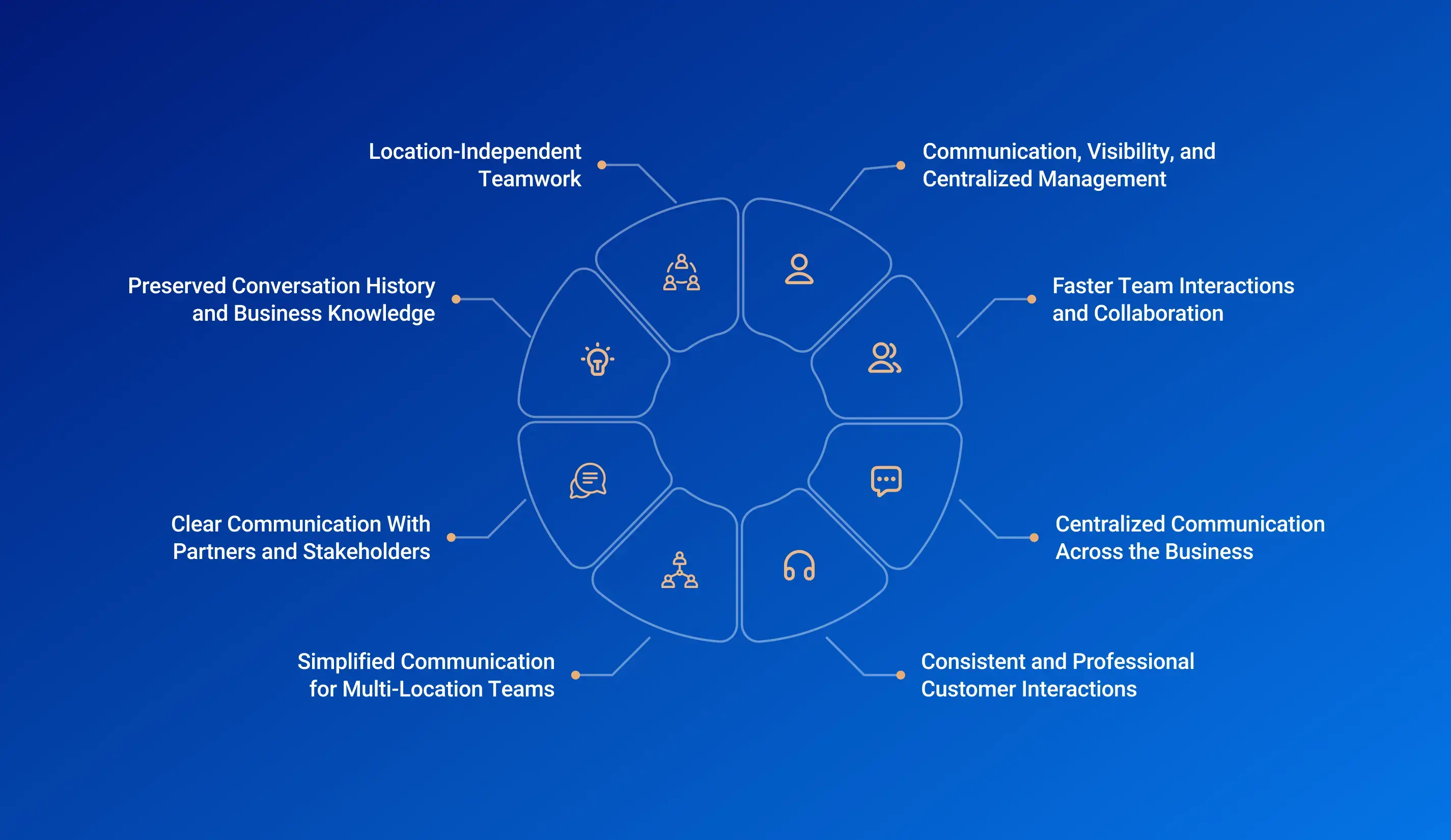
Location-Independent Teamwork
Employees can place and receive business calls from any computer connected to the internet, such as laptops, tablets, or smartphones, while using the same business number on all phones.
- No more “call the office line, then try my mobile” situations
- Remote employees stay as reachable as in-office staff
- Teams remain connected even during travel or office closures
Communication, Visibility, and Centralized Management
The VoIP PBX system allows for the use of call center dashboards and analysis tools, which help managers monitor call and response time and user activity from a single interface.
- Missed calls identification prior to turning into customer complaints
- Smooth workloads across teams and time zones
- Faster response times without requiring frequent check-ins
Faster Team Interactions and Collaboration
Remote teams often lose time switching between email, chat tools, and meetings just to resolve simple issues. Conversations slow down because people are unsure who is available or how to reach them quickly.
- Teams can switch from a message to a call in an instant
- Availability can be viewed by colleagues before making contact
- Questions are answered within minutes rather than hours
Centralized Communication Across the Business
Hybrid teams often use fragmented systems for calling, messaging, and follow-ups, which undermines the efficiency of information delivery and team collaboration. An effective communications solution combines all business conversations into a single space.
- Reduced repetitive questions because of the common conversation history
- Quick access to decisions and previous discussions
- Integrated task handoffs between the team members
Consistent and Professional Customer Interactions
Customers demand prompt and professional feedback, irrespective of the work location of the employee. Sometimes, because all the communications are not channeled through a central platform, the services might become irregular.
- Professional greetings across all teams and locations
- Fewer call transfers and dropped customer conversations
- Unified experience across sales, support, and service teams
Simplified Communication for Multi-Location Teams
With growth in organizations, whether it is an office or a geo, coordination and alignment face challenges. Alignment is made possible with an integrated communication solution.
- Local phone numbers without physical office presence
- Easier support across different time zones
- Centralized administration for distributed teams
Clear Communication With Partners and Stakeholders
Due to the involvement of vendors, partners, and customers, projects may undergo issues with misdirected calls as well as a lack of context.
- Shared context across internal and external discussions
- Reduced delays from misdirected communication
- Better coordination across departments and vendors
Preserved Conversation History and Business Knowledge
When distributed teams don't share conversation information that isn't recorded, their work can suffer due to the loss of important context.
- Record conversations to avoid loss of crucial information
- Faster onboarding using past communication records
- Fewer repeated explanations across teams
Business Benefits of Using a VoIP PBX for Remote & Hybrid Teams
A VoIP PBX system delivers measurable business value beyond basic calling. For distributed teams, it improves cost control, flexibility, and communication quality without adding operational complexity.
Cost Savings
VoIP PBX systems lower expenses related to physical hardware, maintenance, and long-distance calls. Companies pay for predictable subscription costs rather than making huge upfront investments.
Easy Scalability
The VoIP PBX system provides the flexibility to add and remove the number of employees, locations, or numbers without investing in any additional equipment.
Advanced Call Capabilities
VoIP PBX platforms offer features such as call forwarding, voicemail-to-email, auto attendants, and call analytics. Vonage highlights that these capabilities improve responsiveness while reducing manual call handling.
Business Continuity Support
With VoIP Cloud-based PBX, operations can continue even under an outage, office closure, or an interruption/disruption because, by working remotely, there will be no effect on services.
Improved Team Productivity
Centralized communication reduces time spent searching for information or switching tools. Faster call resolution and clearer handovers help teams focus on core work.
Greater Communication Experience
Good calling quality, proper routing, and integration of access functionality increase the employee as well as customer experience regardless of geographical location.
Essential Checklist Business Owners Should Know Before Adopting a VoIP PBX
Before implementing a VoIP PBX system, business leaders should evaluate the following essentials to ensure long-term success:
- Reliable internet connectivity to support call quality
- Cloud-based PBX infrastructure for flexibility and uptime
- Remote and mobile access support for distributed teams
- Easy scalability for growing or changing teams
- Cost-effective pricing with transparent plans
- Call routing and management features aligned with workflows
- CRM and business tool integrations
- Strong security standards and data encryption
- High uptime guarantees and service reliability
- Responsive provider support and ongoing maintenance
Conclusion
Remote work and the hybrid model have transformed how companies communicate, both within and outside the company. Traditional phone systems and fragmented tools struggle to support distributed teams, consistent customer experiences, and scalable operations.
A VoIP PBX solution addresses the following challenges: it centralizes communications, improves visibility, and enables teams to collaborate regardless of geography. It is quite valuable for business owners as well as service providers as it helps create a basis for effective communication, cost savings, and future growth. As the trends for distant and hybrid work evolve, the incorporation of a VoIP PBX solution, as well as technological advancements, is the best strategy that can be adapted.
See how the VoIP PBX solution can help facilitate communication for your work-from-home, hybrid, and multi campus workforce.
Frequently asked questions (FAQ)
Saravana Kumar

I’m passionate about exploring and sharing insights on modern cloud communication technologies. At TeleCMI, I focus on helping readers understand the evolving world of cloud telephony and IVR solutions in a simple yet in-depth way. My goal is to deliver genuine value by turning complex telecom concepts into clear, actionable knowledge that builds trust and drives innovation.

.webp)